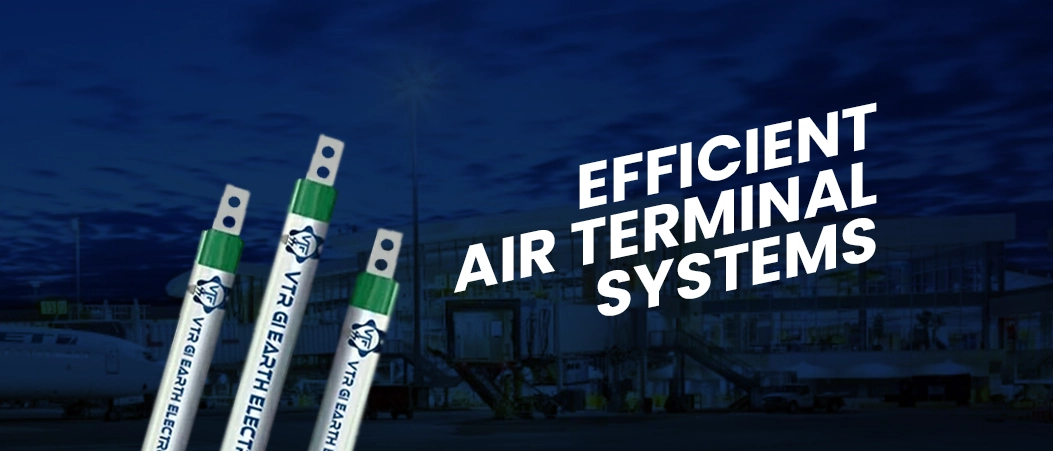
Efficient Air Terminal Systems
Efficient Air Terminal Systems: Engineering Efficiency, System Design, and Real-World Performance
Efficiency in air terminal systems is often misunderstood. In many procurement discussions, it is reduced to “better coverage” or “higher strike capture.” In practice, efficiency is less about extending reach and more about ensuring predictable, low-resistance energy dissipation under real conditions.
As industrial infrastructure evolves larger manufacturing sheds, sensitive automation equipment, and dense electrical networks the margin for error narrows. A lightning event that was once tolerable can now trigger:
- Control system failures
- Production downtime
- Equipment damage
This is why the conversation around efficient air terminal systems is shifting from product-centric evaluation to system-level performance engineering.
Manufacturers like VTR Infotech private Limited, operating from Ghaziabad and supplying across India, often encounter this shift firsthand where buyers are no longer asking “which terminal is best,” but “which system behaves reliably under stress.”
What Are Efficient Air Terminal Systems?
Efficient air terminal systems are lightning interception components designed to provide optimal strike capture and energy dissipation through minimal resistance pathways, ensuring reliable performance when integrated with conductors and grounding systems.
Efficiency is not a standalone property it emerges from how well the system components work together.
How Is Efficiency Defined in Air Terminal Systems?
Efficiency in air terminal systems refers to the system’s ability to consistently intercept lightning and transfer electrical energy safely to ground with minimal losses, resistance, or failure points, even under varying environmental and structural conditions.
It is measured less by claims and more by system behavior over time.
Technical Specifications & Key Features
Efficiency is embedded in design parameters. Some of the most critical ones include:
1. Strike Interception Geometry
- Determined by terminal height and placement
- Evaluated using protection angle or rolling sphere methods
- Improper geometry reduces effective coverage
2. Electrical Conductivity
- Influenced by material selection
- Lower resistance ensures faster energy transfer
- Reduces risk of side flashes
3. Connection Integrity
- Joints between terminal, conductor, and grounding
- Often the weakest link in real installations
- Mechanical looseness can reduce efficiency
4. Standards Alignment
Efficient systems typically align with:
- International Electrotechnical Commission (IEC 62305)
- National Fire Protection Association (NFPA 780)
These frameworks prioritize predictability over theoretical performance gains.
Materials & Production Methodology
Material Influence on Efficiency
Copper
- Superior conductivity
- Stable over long-term exposure
- Preferred in high-performance environments
Aluminum
- Lightweight and scalable
- Suitable for large installations
- Requires careful connector compatibility
Stainless Steel
- Mechanically strong
- Suitable for corrosive conditions
- Slightly lower conductivity compared to copper
Production Considerations
Efficiency is often shaped during manufacturing, not just design.
Key process factors:
- Precision rod forming to maintain straightness
- Thread accuracy for secure installation
- Surface finishing to reduce oxidation
- Dimensional consistency across batches
Even minor inconsistencies can introduce resistance points. This is where manufacturing discipline rather than design variation defines real efficiency.
Performance & Durability Insights
Real-World Efficiency Factors
1. Corrosion Resistance
Over time, oxidation increases resistance, reducing system efficiency.
2. Mechanical Stability
Wind loads can loosen fittings, affecting continuity.
3. Electrical Continuity
Efficiency depends on uninterrupted current flow across all components.
4. Maintenance Intervals
Systems degrade gradually efficiency drops before visible failure.
A common industry pattern is that “inefficient systems rarely fail instantly they degrade silently.”
Applications & Use Environments
Efficient air terminal systems become critical in:
Industrial Manufacturing Units
- Protects PLC systems and automation
- Reduces unexpected downtime
Warehousing & Logistics Parks
- Large surface exposure increases strike probability
Commercial Infrastructure
- Requires integration with structural and aesthetic design
Energy & Utility Installations
- Substations and transmission points demand high reliability
Across Pan-India supply networks mapped through presence pages such as VTR Infotech efficiency requirements often vary based on regional climate, especially in high lightning-density zones.
Variants / Type Comparison (Neutral)
|
Type |
Efficiency Perspective |
Suitable Scenario |
|
Conventional Air Terminals |
Reliable, predictable performance |
Standard industrial structures |
|
Early Streamer Emission (ESE) |
Claims extended reach, debated consistency |
Open-area installations |
|
Multi-point Passive Systems |
Distributed interception improves redundancy |
Complex rooftops |
Practical Insight:
Efficiency is not always about coverage expansion. In many industrial cases, redundancy and reliability outperform theoretical reach.
Buyer Evaluation Checklist
When evaluating efficient air terminal systems:
System-Level Fit
- Does the design match structure geometry?
- Is protection method validated?Material Reliability
- Will materials sustain environmental exposure?
Manufacturing Precision
- Are tolerances consistent?
- Is threading reliable?
Installation Practicality
- Ease of mounting and integration
- Compatibility with existing infrastructure
Supplier Stability
- Manufacturing base clarity (e.g., Ghaziabad-based production)
- Ability to supply consistently across projects
Efficiency often emerges from alignment not individual specifications.
Frequently Asked Questions
1. What makes an air terminal system efficient?
Efficiency comes from low resistance, proper placement, and seamless integration with grounding systems not just the terminal design.
2. Is copper always the most efficient material?
From a conductivity perspective, yes. However, project constraints like cost and scale may lead to aluminum usage.
3. Do taller air terminals improve efficiency?
Not necessarily. Height must align with protection calculations; excessive height without planning can reduce effectiveness.
4. Can efficiency degrade over time?
Yes. Corrosion, loose connections, and environmental exposure gradually reduce performance.
5. Are ESE systems more efficient than conventional ones?
Their efficiency claims depend on specific conditions and are subject to regulatory acceptance.
Supply & Distribution Capability
Efficiency in procurement is not limited to product design it extends to supply consistency.
Manufacturers like VTR Infotech private Limited support:
- Pan-India distribution
- Standardized manufacturing batches
- Alignment with industrial project timelines
For broader system understanding and product-level specifications, refer to the national product page:
VTR Infotech
Conclusion
Efficiency in air terminal systems is not a feature it is an outcome.
It reflects how well materials, design, manufacturing, and installation align under real-world conditions. In industrial environments, where downtime carries measurable cost, this alignment becomes critical.
The industry is gradually moving away from isolated product evaluation toward system reliability thinking. That shift is subtle but significant.
If you are evaluating efficient air terminal systems for an upcoming project, reviewing system design, environmental exposure, and integration factors carefully can help avoid long-term inefficiencies.
For further technical insight or application-specific discussion, you can connect with VTR Infotech private Limited here:
https://www.vtrinfotech.com/contact/





What Is Electrical Earthing and Why Is It Important
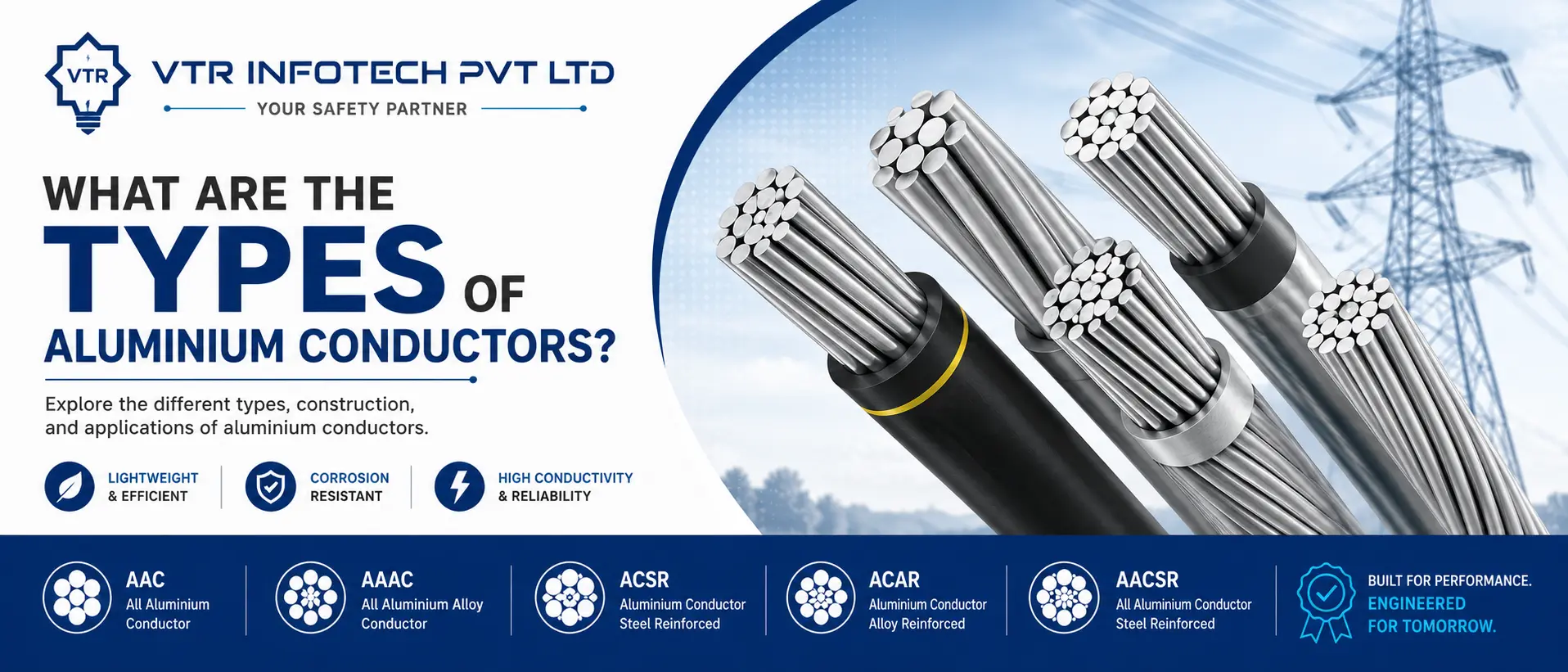
What Are the Types of Aluminium Conductors?
Efficient Air Terminal Systems
Chemical Earthing: Types, Benefits and Installation Process
Aluminum Conductors vs. Copper Conductors Pros and Cons


Copper Earthing Electrodes Why Does Your Home Need Them?